I'm heading to Gettysburg today to play some good old fashioned old time base ball, with no mitts, no batting helmets, weird rules, and a cow pasture for a field. Great times!
I've been to Gettysburg several times, and love being able to appreciate the battles fought there and the sacrifices made by so many to ensure the unity of these states.
I know the confederate flag is a hot topic right now, or at least will be for another week or so until something else comes along, so I thought I'd weigh in on my opinion as to why a piece of cloth with stars and lines and colors is such a big deal.
To me, it's not about racism, it's not about state's rights, it's about history. So that's where I'm going to focus.
To sum up, this is such a big deal because in my humble opinion, the war isn't over. Not by a generation.
Oh sure, treaties were signed and slaves were set free and we've continued the march towards equality (especially in light of the gay marriage ruling), but that doesn't mean the hearts and minds of the captured have been transformed. Remember, the civil war ended just over 150 yeras ago. That's two generations. Someone who's alive today had a great-great grandfather fight in the civil war. That's not a lot of time.
And why is it not over? Because we won't let it be. We're terrified to face the truth about the civil war, which is this:
1) It wasn't about slavery. Oh sure, there's slavery written into the constitutions of the states, and slavery was the main source of income generation in the south, and all signs point to it being about slavery. But if it truly was, and the north one, and slavery was abolished, why does the divide continue to this day? Why do four states still celebrate a separate confederate memorial day? Is it because they're so proud of their ancestors fighting to keep slaves? Are they proud of their bigotry? Some are, perhaps, yes. There are no shortages of white supremacists in the country. But they're an aberration, statistically speaking. A blip on the radar. The states still continuing to fly the confederate flag, holding confederate day ceremonies, in my opinion, still desperately WANT to be the CSA.
Texas has mentioned it before, and has the option in its constitution. Mississippi took 148 years to think about the thirteenth amendment before making it official. South Carolina just took down the confederate flag flying over the capital as I'm sure you all know.
You see a pattern? We're not done with this war thing.
The second big thing we're afraid to face? We're letting another foreign country celebrate their killing of Americans on American soil with monuments and consecration of grounds that we would never allow another foreign country to do.
2) The CSA was, in its mind, a foreign country. We refuse to recognize that objective.
And that may be intentional. We may never want to forget the fact that the CSA was before 1861 the United States. But I question whether we should or whether that recognition is propagating the secessionist ideal.
Here's another way to look at it. Many of us have relatives that fought in the civil war. Many of us have relatives that fought in the Revolutionary War. FOR THE BRITISH. Why, then, aren't there Union Jacks flying around as part of our "heritage"? Why, at Revolutionary War battle sites, are there no monuments to the Queen's Rangers or such?
Because we recognize them as the enemy, and the USA as the victors, and treat the battlefields as such. But in civil war battle sites, while there is a victor or loser (or in the case of Antietam, neither) we don't recognize the CSA as a separate country.
Should we? My position is that each soldier carrying a weapon against the Union Army was no longer an American. They died Confederate Soldiers, not as Americans. Now it is a logical argument to make that since the US government didn't recognize the CSA (as did no one else in the world except maybe Britain), that they never really left the USA. But here's where my point comes in: in their mind, they did. They renounced their citizenship when they took up arms against the government.
At best that makes them traitors, at worst foreign invaders (in the case of Gettysburg). So to keep monuments up to the Confederate soldiers is to say "This monument is in memorial to those soldiers who gave their lives in an attempt to break away from the US and create a new country, one founded on state's rights, etc. etc." Sound familiar? A little like our own revolutionary war?
Except the CSA lost. The CSA is a ghost, relegated to history as should all of its warriors, battle flags and achievements. Instead, we celebrate it.
To me, this is like letting Japan put up monuments to their fallen kamikaze pilots around Pearl Harbor. If we did that, wouldn't we continue to brew hatred with the Japanese? If some continued to fly the Union Jack and held beliefs that America should be part of the British Empire, wouldn't we continue to harbor hatred towards England?
So we continue to bring forth the CSA and keep it forefront of our mind, and thus we continue the civil war. Will this ever change? I don't think so. And because it won't, we will continue to fight a vicious civil war. Not with guns and ammo, but with words and laws and politics. And that's even more dangerous.
My hope is that we forget the CSA. Keep it in the history books where it belongs as a failed idea and a pointless endeavor. My hope is that we focus on the future and unite the states once and for all, not through force or coercion, but because it's who we are. As Americans.
Showing posts with label self-publishing. Show all posts
Showing posts with label self-publishing. Show all posts
Sunday, July 19, 2015


Wednesday, July 15, 2015
Change is coming!
I can see it now. You've all clicked here to see what change I'm talking about. How big is it? How will it affect me? Will it be minor, major or unnoticeable?



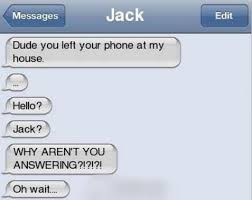
Or really really noticeable
I don't actually know.
Sorry, I hope that wasn't too great a letdown. But here's my point. Change is always coming. It's inevitable, even when you look outside your window. But that's cliche and boring and everyone knows the only constant is change. My point is more having to do with how we react.
Did your curiosity lead you to this page based on fear? Or was it based on excitement? See, I think there's two types of people in the world, those that embrace change and those that fight against it with all their might. And everyone else who falls in between. Ok, there are 7 billion types of people in the world but that's beside the point.
Let's call it a scale. And where you are on the change acceptance scale usually tells us if you're going to be a jerk about change, or you're going to be laid back and Jeff Bridges "The Dude" like about change.
Wanna guess where he falls on the spectrum?
The impact of change on our lives normally influence our response to the change. A small change to our morning routine may tick us off a bit, but a large change to government policy may make us lose our mind and do something stupid like watch Fox News. Things we're used to doing every day are easier for us than things we have to learn about every day. Things we've always believed are truer than things someone just told us for the first time. These are given.
But what keeps us from staying more towards The Dude end of the spectrum? Why can I handle change of a boyfriend (cuz he was a moron anyway) but I can't handle a change in the casting of Batman?
I'll never forgive them
I have a theory. It's an economic theory mixed in with a psychological theory with just a dab of evolutionary theory on top just for kicks.
We talked about the impact to our lives. We'll call that "the impact to our lives". Now add to that our rock solid, deep, core inner faith in something, which we'll call "trust", and you can see where you fall on the scale. If the impact is huge (Iranians will now have the capability to destroy the entire USA with nuclear bombs sent down from space stations orbiting the moon) and your faith in something is low (Obama is only slightly more intelligent than liquid soap), you're liable to be freaking the heck out.
America learns about Ben Affleck as Batman
So how do you change your spot on the spectrum? Focus on one of those two things, and then CHANGE them (see how I did that?) This provides two benefits: one, YOU control the change to your own thought processes, and two you'll feel better about the change coming your way.
So in the above example, you could a) research the impact (will they really rain hellfire from above with the whole world watching their every move?) or b) raise your level of faith (usually requiring disparate views of the topic, by, let's say, not watching Fox and looking at non-biased sources).
Don't be this guy
A third option is to avoid the change entirely. Now, that's not really an option in the scenario above, unless you wanna take on the US Government, but if it's a change coming your way that you can avoid, you have that power. You can act. Even if it's writing a letter, or campaigning against DA MAN, or finding a new job instead, you do have the power to take matters into your own hands. Usually, however, you'll find that takes faith again, either in yourself, or in the people you need to help you avoid that change.
In any case, hopefully you'll see that the change isn't as bad as you thought. Sometimes the leap of faith is huge (Especially when dealing with anything related to the government), and sometimes the impact may be greater than you think. Sometimes avoiding the change may be more work than you anticipated. But never give up. Change is coming. And you CAN control your response to it.
Monday, July 6, 2015
Optimism is NOT Hope
I may have written this before, but so be it. Apologies for repetition, but if I had, this bears repeating.
Optimism abounds in all of us, but don't confuse that with hope. Hope is a good thing, but it is a wishful thing. It is a thought that we have that things will fall in our favor. It's not a bad thing, but it's not the very best of things.
Because it eliminates our role in the outcome.
Optimism, however, is the belief that we have the same chance as others. That we can make things happen. Andy Dufrane in The Shawshank Redemption said "...hope is a good thing, maybe the best of things, and no good thing ever dies." But Andy made his own escape, it didn't just happen. When you "hope" for something you wait for it to happen.
I'm tired of "hoping" my book sells. Starting today, I'm going to be optimistic that I can make it sell.
Are you optimistic about your ability to complete your story, publish it, have it sell? Or are you just "hoping"?
Optimism abounds in all of us, but don't confuse that with hope. Hope is a good thing, but it is a wishful thing. It is a thought that we have that things will fall in our favor. It's not a bad thing, but it's not the very best of things.
Because it eliminates our role in the outcome.
Optimism, however, is the belief that we have the same chance as others. That we can make things happen. Andy Dufrane in The Shawshank Redemption said "...hope is a good thing, maybe the best of things, and no good thing ever dies." But Andy made his own escape, it didn't just happen. When you "hope" for something you wait for it to happen.
I'm tired of "hoping" my book sells. Starting today, I'm going to be optimistic that I can make it sell.
Are you optimistic about your ability to complete your story, publish it, have it sell? Or are you just "hoping"?
Saturday, March 21, 2015
Twitter advertising - Results so far
...not good.
Now, before I go into the results, understand that this isn't a scientific study by any stretch. There are so many other variables to take into consideration as to whether social media marketing works, beginning with "is your book any damn good?"
Well, I like to think the nearly 4 star average review on Amazon is good, but maybe it's not enough to justify the cost of the paperback or kindle. Then again, maybe one or two reviews turns people off and they don't buy the book. Or the price is out of their range. Who knows.
Regardless, here's the background.
I started a twitter campaign on March 4, with a $100 max spend, and a max bid of $3 (more on that in a minute) and a max spend per day of $5. Right there I've listed three variables that may have an impact on both the visibility of the ad and the timing.
The objective was to get people to click over to the Amazon site listing my book. Obviously twitter can only lead the horses to water, it's up to me to make sure the Amazon site (i.e. the book summary) gets them to drink. Another variable.
The details of the campaign I'll leave out, suffice to say I chose to advertise people who follow or talk about post-apocalyptic topics, as well as younger demographic tv shows and writers like John Stewart or Stephen King.
A bid, by the way, is listed as "how much a visitor to your website is worth", with a higher bid increasing your chances of your ad being shown. I chose three dollars, because one person buying a book is a $3.86 profit to me from CreateSpace, so subtracting $3.00 still yields a profit. I know, a little business-y for a writer's taste, but if you're self-publishing, get used to it. You need to know this stuff.
Overall results then, so far: 1 book sold in paperback (woo-hoo!), 1 kindle ebook purchased, and 9 books borrowed or bought through Kindle Prime (which netted me about $1 in profit). So, if this all holds true, I'll spend about $100 to make roughly $15.
Hardly worth it.
HOWEVER, on the plus side, twitter does offer a lot of demographics about who is clicking on the link, meaning who is interested in your book enough to go check it out.
Right now I've got a click through rate of roughly .5%. That means for every thousand people seeing my ad, maybe five will click on it. That may sound really low, but that's the equivalent of spamming people, and .5% is actually pretty good, according to the stats you can find here.
But of the 116 people who clicked to my site, only 11 of them bought a book, which means interest is at about 9%. Not good.
I'm written too much here, so I'll carry on next with determining the best point for advertising and return on investment - finding the sweet spot so to speak. But again, I have to stress I'm not a PR expert and this isn't a scientific study. It's all specific to me and the variables of my work. In other words, results may vary.
In the meantime, if you have questions you'd like to ask, feel free to comment here, or find me on Goodreads here and drop me a question there. And most definitely, WRITE ON!
Now, before I go into the results, understand that this isn't a scientific study by any stretch. There are so many other variables to take into consideration as to whether social media marketing works, beginning with "is your book any damn good?"
Well, I like to think the nearly 4 star average review on Amazon is good, but maybe it's not enough to justify the cost of the paperback or kindle. Then again, maybe one or two reviews turns people off and they don't buy the book. Or the price is out of their range. Who knows.
Regardless, here's the background.
I started a twitter campaign on March 4, with a $100 max spend, and a max bid of $3 (more on that in a minute) and a max spend per day of $5. Right there I've listed three variables that may have an impact on both the visibility of the ad and the timing.
The objective was to get people to click over to the Amazon site listing my book. Obviously twitter can only lead the horses to water, it's up to me to make sure the Amazon site (i.e. the book summary) gets them to drink. Another variable.
The details of the campaign I'll leave out, suffice to say I chose to advertise people who follow or talk about post-apocalyptic topics, as well as younger demographic tv shows and writers like John Stewart or Stephen King.
A bid, by the way, is listed as "how much a visitor to your website is worth", with a higher bid increasing your chances of your ad being shown. I chose three dollars, because one person buying a book is a $3.86 profit to me from CreateSpace, so subtracting $3.00 still yields a profit. I know, a little business-y for a writer's taste, but if you're self-publishing, get used to it. You need to know this stuff.
Overall results then, so far: 1 book sold in paperback (woo-hoo!), 1 kindle ebook purchased, and 9 books borrowed or bought through Kindle Prime (which netted me about $1 in profit). So, if this all holds true, I'll spend about $100 to make roughly $15.
Hardly worth it.
HOWEVER, on the plus side, twitter does offer a lot of demographics about who is clicking on the link, meaning who is interested in your book enough to go check it out.
Right now I've got a click through rate of roughly .5%. That means for every thousand people seeing my ad, maybe five will click on it. That may sound really low, but that's the equivalent of spamming people, and .5% is actually pretty good, according to the stats you can find here.
But of the 116 people who clicked to my site, only 11 of them bought a book, which means interest is at about 9%. Not good.
I'm written too much here, so I'll carry on next with determining the best point for advertising and return on investment - finding the sweet spot so to speak. But again, I have to stress I'm not a PR expert and this isn't a scientific study. It's all specific to me and the variables of my work. In other words, results may vary.
In the meantime, if you have questions you'd like to ask, feel free to comment here, or find me on Goodreads here and drop me a question there. And most definitely, WRITE ON!
Saturday, February 28, 2015
Read it outloud!!
Final phase of editing before releasing it to the public in book form, and this, my friends, is the single most important part. Read your entire book out loud. Pretend you're making an audio book. Do voices if you want. Mumble on the bus to work like I did for two weeks straight. It's ok. It's winter. Throw on a tattered hoodie and forget to shower and people just think you're a crazy person.
Why is it so important?
Because our brilliant mind can auto-translate and buzz over misspelled words without us even knowing it. Reading your book isn't good enough, because the mind works too well and efficiently: you need to slow yourself down, and reading out loud does that. It forces you to go line by line.
Take, for example, this little beauty I picked up in my own book after reading it to myself, oh, seven or eight times:
Did you catch it? Don't feel bad if you didn't, like I said I buzzed over it seven or eight times. Spell check accepted it because it's a real word (although it doesn't make any sense in context), and my mind saw it and instantly dismissed it because it knew what it should've said.
If you read it out loud, you go line by line. Slowly. And then you catch it:
Tommy hoisted his sniper rifled on his shoulder and gave me a nod.
RIfled. A d. One simple letter that doesn't belong.
There were plenty of other examples that I caught by reading the book out loud. It does take time, it slows you down to a crawl and burns inside your "get this thing out as quickly as you can" center, but it's well worth it. Trust me.
So read it out loud, and WRITE ON!
Why is it so important?
Because our brilliant mind can auto-translate and buzz over misspelled words without us even knowing it. Reading your book isn't good enough, because the mind works too well and efficiently: you need to slow yourself down, and reading out loud does that. It forces you to go line by line.
Take, for example, this little beauty I picked up in my own book after reading it to myself, oh, seven or eight times:
I pulled Bill
back a bit. “What the hell are you
doing?”
“Giving you a
chance,” Bill said.
“Yeah, but this
isn’t really a ‘giving you a chance’ kinda moment. This is serious stuff.”
“Do you
honestly think there’s anything out there you can’t handle? Worse than the lake? Worse than what you told me about in
Pittsburgh? You’ve seen the worst nature
has to offer, and you’re still here.
Anyone who can cover the ground you’ve covered, keeping his team intact,
is ok with me.”
I stood there,
frozen and confused. Me? I looked around the room. Ashley didn’t smile, she just put her two
pistols into her jeans. “He’s right,”
she said.
Louie looked
down at his shoes. “I don’t want to go
with anyone else.”
Tommy hoisted
his sniper rifled on his shoulder and gave me a nod.
The general
shook his head. “Not these three. Bill - for chrissakes, they’re just kids.”
“Not anymore
sir. They stopped being kids a long time
ago.”
No argument
from anyone. The room grew quiet. “Fine.
Bill, you’re in charge, Dawson’s second in command. Get those people organized and get ‘em
ready. Let’s move.”
Did you catch it? Don't feel bad if you didn't, like I said I buzzed over it seven or eight times. Spell check accepted it because it's a real word (although it doesn't make any sense in context), and my mind saw it and instantly dismissed it because it knew what it should've said.
If you read it out loud, you go line by line. Slowly. And then you catch it:
Tommy hoisted his sniper rifled on his shoulder and gave me a nod.
RIfled. A d. One simple letter that doesn't belong.
There were plenty of other examples that I caught by reading the book out loud. It does take time, it slows you down to a crawl and burns inside your "get this thing out as quickly as you can" center, but it's well worth it. Trust me.
So read it out loud, and WRITE ON!
Wednesday, February 4, 2015
How to spot a "show don't tell" violation
More revisions? Like to find those areas you could improve, like searching for the word "was"?
Search for any narration that includes distance. Words like "about", "miles", "feet", "yards".
These are boring descriptions that leave the reader trying to imagine what 100 yards really looks like. Ever notice how many times people refer to football fields when talking about distance? It's because we can visualize a football field.
Search for any narration that includes distance. Words like "about", "miles", "feet", "yards".
These are boring descriptions that leave the reader trying to imagine what 100 yards really looks like. Ever notice how many times people refer to football fields when talking about distance? It's because we can visualize a football field.
About is usually a dead give away, unless you're describing what something is about. And again, it's ok for characters to use this, as people do this all the time, but the narrator shouldn't. It's just boring, because we're not interested in metrics or area or what have you.
For Example:
The road stretched for about two miles ahead of us. First of all, I can't visualize two miles, because even in the flattest heartland of Kansas, you may not be able to actually see two miles. But regardless, this is boring. The road stretched out ahead of us until it shrank into itself on the horizon gives you a better visualization. When Andy Dufrane crawled through a half-mile of the foulest smelling shit you could think of, Stephen King made sure we knew that was "five and half football fields".
That's a long way.
If something is about a hundred yards away, you could say the person of interest was so far away they appeared slightly larger than my thumb. Or Jim Lovell used to block out the moon with the tip of his thumb, indicating how far away something that big was.
How deep is the ocean? Don't answer in miles. Someone going two miles below the surface of the ocean is hard to visualize. Someone going so deep in the ocean that the sun, without a single cloud to block it, vanished like God had pulled the string and clicked it off, is in pretty deep.
A little flowery, I know, but you get the point. Watch for places where your narrator is telling us about distances and you'll find plenty of gold pieces you just need to dust off.
So? Go get crackin' and WRITE ON!
Monday, January 19, 2015
Search for the WAS
How to find weak writing in your manuscript? Search for the word WAS.
Most of the time, as I'm going through my book, I find this word describing something, which is the antithesis to the "Show, don't tell" mantra. It definitely tells, most of the time.
When I find it, usually there are three things that are happening:
Most of the time, as I'm going through my book, I find this word describing something, which is the antithesis to the "Show, don't tell" mantra. It definitely tells, most of the time.
When I find it, usually there are three things that are happening:
- I'm being lazy, and can beef up the action verb more. "The sun was setting", for example, versus "the setting sun exploded color...". The verb went from "was" to "exploded" which is much more engaging.
- I'm using the passive voice. Never good. "The building was blown up by the militants" instead of "the militants destroyed the building". Again, a more exciting action verb.
- I'm trying to use a metaphor, but again, being lazy: "she looked at me like I was crazy" as opposed to "she stared at me like my head had just sprung open and butterflies flew out".
HOWEVER, there are times when I keep the WAS in.
- In dialogue. Yes, it's not as exciting, but that's how people speak. Take any of the three items above and put quotes around it, and you've just made your teen sound like a Harvard grad.
- When it's require for past-perfect tense. Like when a character is rehashing an event prior to the one they're in, or when they're remembering something. "I remember he was running down the corridor" is perfectly ok because it's part of the past perfect tense.
So I'm searching through my manuscript now and every time I see a "was" I look for these different items. This is when the rubber meets the road, where your writing skills are really tested. This is where an author could spend an hour on a single sentence. This is what separates the pros from the unpublished. So get searching, and
WRITE ON!
Sunday, January 11, 2015
3 Fears That Keep Writers from Writing
Ok, these are my three, and I'm no psycho-analytical genius, so take them for what they're worth. But c'mon, every one of us that has either not been published or has self-published have stopped writing at some point, right? We may call it writer's block, but there's something deeper than just trying to figure out another word for "like".
We're afraid.
Of what, you may ask? Why, if I love writing the way I do, would I possibly be so afraid as to STOP writing? You can't be published if you stopped writing. In fact, 100% of all unfinished novels that have never seen the light of day are UNPUBLISHED (that one's a fact.)
So why do we stop writing?
This is a weird one, so I thought I'd throw it out first. What does Fear of Success mean? Who the heck would ever be afraid of success? Money, fame, fortune, a beautiful model on each arm (depending on the tolerance level of your spouse). Sounds great, right?
Wrong. What does Success really entail? CHANGE. Imagine your book finally getting published. Selling. Through the proverbial roof, in fact. What does that mean? Changes to your lifestyle. And I don't mean a brand new Porsche. I mean possibly quitting your job. Having to look for health insurance as a self-employed individual. If you have kids, it might mean less time with them. More time writing, but with greater, stricter deadlines. Flights to weird places. Book signings. Marketing work, all while you still try to hang on to your crummy day job that you can't wait to quit but you have to keep because the royalties from last month just paid for a new printer and not much else.
How do you overcome this? You face the fear, you imagine your life as a success, and you plan for it. You organize your future life to understand what the change will mean, and make the change less of a scary "oh my God my life will be totally turned upside down" and more of a "man I can't wait."
Fear gone. Until it's replaced by:
Yes, this is something that every author has so I won't bog you down with clichés and obvious points. You know what this means. You know how it feels. You see the rejection letters, hear the "It was good" reviews from your closest friends, and you know you've just dropped your drawers in front of three agents at a writer's workshop and had each of them laugh at you. You've failed.
So how do you overcome it? EXPECT FAILURE. Welcome it. Relish the rejection letters, and never accept a critique of "it was pretty good". Failure means progression, pure and simple. Without it, you can't recognize what needs to change. Without it, you only know you're NOT doing something. Like Edison famously once said, "I didn't fail 1000 times, I found 1000 ways to NOT make a light bulb". Find those ways. Don't, of course, drive yourself to failure. That'd be silly. But realize each time you think you've failed, that you're a real writer.
And then, you'll only be left with:
This is an altogether different type of fear, based on the reason WHY you're writing. We write because we love the act of creating worlds, characters, being charge, playing God, whatever. But really, deep down inside, we write because we have something to say. My author friends, the published ones, have written very personal narratives that touch on social issues they feel people need to be aware of. K.M. Walton's CRACKED, about not just bullying but why someone might bully, is a very relevant social topic. SPEAK, by Laurie Halse Anderson, is a wonderful story about a very troubling social issue of rape. Even if the story isn't that heavy, like my book The Timepiece Chronicles (link above), there still is a theme to our writing that we want others to come away with (in my book it's about the importance of not fighting what happened in the past).
But what if your theme causes controversy, or you're seen as an expert when really you just wanted to express your opinion? Or what if people argue against you, or challenge you? That can be scary.
So, again, how do you overcome it? TRUST YOURSELF WITH THE STORY. You've written about this for a reason. You know it in your heart to be true, no matter how many people take offense, or challenge you, or want more from you. Hopefully, in your research, you've become somewhat of an expert, and hopefully you are passionate about it that you won't stop learning more. You can stand your ground, accept the challenges, or promote your idea from the highest mountaintop if you believe in yourself, and believe in your ability to deliver the message.
We're all messengers. Every single one of us that writes has a message to send. Trust yours, and trust yourself to deliver it.
We're afraid.
Of what, you may ask? Why, if I love writing the way I do, would I possibly be so afraid as to STOP writing? You can't be published if you stopped writing. In fact, 100% of all unfinished novels that have never seen the light of day are UNPUBLISHED (that one's a fact.)
So why do we stop writing?
1. FEAR OF SUCCESS.
This is a weird one, so I thought I'd throw it out first. What does Fear of Success mean? Who the heck would ever be afraid of success? Money, fame, fortune, a beautiful model on each arm (depending on the tolerance level of your spouse). Sounds great, right?
Wrong. What does Success really entail? CHANGE. Imagine your book finally getting published. Selling. Through the proverbial roof, in fact. What does that mean? Changes to your lifestyle. And I don't mean a brand new Porsche. I mean possibly quitting your job. Having to look for health insurance as a self-employed individual. If you have kids, it might mean less time with them. More time writing, but with greater, stricter deadlines. Flights to weird places. Book signings. Marketing work, all while you still try to hang on to your crummy day job that you can't wait to quit but you have to keep because the royalties from last month just paid for a new printer and not much else.
How do you overcome this? You face the fear, you imagine your life as a success, and you plan for it. You organize your future life to understand what the change will mean, and make the change less of a scary "oh my God my life will be totally turned upside down" and more of a "man I can't wait."
Fear gone. Until it's replaced by:
2. FEAR OF FAILURE.
Yes, this is something that every author has so I won't bog you down with clichés and obvious points. You know what this means. You know how it feels. You see the rejection letters, hear the "It was good" reviews from your closest friends, and you know you've just dropped your drawers in front of three agents at a writer's workshop and had each of them laugh at you. You've failed.
So how do you overcome it? EXPECT FAILURE. Welcome it. Relish the rejection letters, and never accept a critique of "it was pretty good". Failure means progression, pure and simple. Without it, you can't recognize what needs to change. Without it, you only know you're NOT doing something. Like Edison famously once said, "I didn't fail 1000 times, I found 1000 ways to NOT make a light bulb". Find those ways. Don't, of course, drive yourself to failure. That'd be silly. But realize each time you think you've failed, that you're a real writer.
And then, you'll only be left with:
3. THE FEAR OF EXPOSING YOURSELF
This is an altogether different type of fear, based on the reason WHY you're writing. We write because we love the act of creating worlds, characters, being charge, playing God, whatever. But really, deep down inside, we write because we have something to say. My author friends, the published ones, have written very personal narratives that touch on social issues they feel people need to be aware of. K.M. Walton's CRACKED, about not just bullying but why someone might bully, is a very relevant social topic. SPEAK, by Laurie Halse Anderson, is a wonderful story about a very troubling social issue of rape. Even if the story isn't that heavy, like my book The Timepiece Chronicles (link above), there still is a theme to our writing that we want others to come away with (in my book it's about the importance of not fighting what happened in the past).
But what if your theme causes controversy, or you're seen as an expert when really you just wanted to express your opinion? Or what if people argue against you, or challenge you? That can be scary.
So, again, how do you overcome it? TRUST YOURSELF WITH THE STORY. You've written about this for a reason. You know it in your heart to be true, no matter how many people take offense, or challenge you, or want more from you. Hopefully, in your research, you've become somewhat of an expert, and hopefully you are passionate about it that you won't stop learning more. You can stand your ground, accept the challenges, or promote your idea from the highest mountaintop if you believe in yourself, and believe in your ability to deliver the message.
We're all messengers. Every single one of us that writes has a message to send. Trust yours, and trust yourself to deliver it.
Thursday, January 8, 2015
5 Things I've Learned About CreateSpace
After a lengthy sabbatical, I've picked up the blog pen again to keep you abreast of my adventures in self-publishing land.
To catch everyone up: I was offered two eBook agreements by small time post-apocalyptic eBook publishers, and after wrestling with my indecision, I chose not to do either. Stupid, perhaps, but some part of me felt that this was something I had to do alone.
Fast forward to today - I'm in the midst of editing the printed version of my book, after getting it to CreateSpace via Amazon. It's print-on-demand, so there's no cost, just a percentage of your sales. As opposed to publishing houses like AuthorHouse, I think this is totally worth it. Sure other places like AuthorHouse offer a lot of perks, but they're also expensive.
So, without further ado: 5 things I've learned about CreateSpace:
To catch everyone up: I was offered two eBook agreements by small time post-apocalyptic eBook publishers, and after wrestling with my indecision, I chose not to do either. Stupid, perhaps, but some part of me felt that this was something I had to do alone.
Fast forward to today - I'm in the midst of editing the printed version of my book, after getting it to CreateSpace via Amazon. It's print-on-demand, so there's no cost, just a percentage of your sales. As opposed to publishing houses like AuthorHouse, I think this is totally worth it. Sure other places like AuthorHouse offer a lot of perks, but they're also expensive.
So, without further ado: 5 things I've learned about CreateSpace:
- It's pretty easy to use, but the layout must be exactly to their specs. Don't mess with it, or your book will look amateurish.
- It does require an ISBN number. If you're self published and don't have one yet, get one. It's about $129, and if you go through CreateSpace to get it they'll add it to their distribution list for libraries. Not really relevant for an R-rated book such as Under a Broken Sun, but definitely something I'm going to do with The Timepiece Chronicles.
- NOTE: Amazon Kindle Direct Publishing does NOT require an ISBN - they assign an Amazon number regardless. So if you're not planning on printing, don't worry about it.
- However, if you want to protect your work thoroughly, it does help ;)
- I pretty much just added 2 because my teacher always said when outlining every 1 must have at least a 2.
- The cover can be a bit tricky, but if you have the cover for your eBook already prepared, it's not too hard to get it into the format and size CreateSpace requires. Just don't expect a "slam it in" or as the old infomercial used to say, "set it and forget it". It'll take some tweaking.
- The site overall does a good job of walking you through what you need, and letting you know if something doesn't fit or doesn't work.
- Finally, when you get it all complete, for about $12 you can send yourself a PROOF copy to review and edit. I HIGHLY recommend this, one because it's TOTALLY COOL to see your book in soft cover for the first time, and two, it's a lot easier to edit when it's in book form, because you read it like a real book. And if you're like me, you'll find a lot of errors you would've caught in any real book.
That's it for now. In the interest of keeping blogs short, I'll sign off.
Coming up: trouble with my inner child, and how that stopped me from writing, and 10 reasons why I left Apple and switched to Surface Pro 3.
Later on, my writing family!
Saturday, March 22, 2014
Decisions, Decisions.
I got an offer from Permuted Publishing! A three book deal for Under a Broken Sun, which is pretty exciting!
So why am I not bouncing off the walls?
Because I HAVE NO IDEA WHAT I'M DOING!
Is it a good offer? A bad offer? What do I look for when signing my rights away?
The challenge of being a self-published author.
I'm searching for agents, but if you go to an agent with a publisher in hand, they're less likely to work with you, especially if it's a smaller niche publisher like Permuted (they are strictly post-apocalytpic). Plus an agent knows the big boys - Simon & Schuster, etc, which means bigger advances.
In other words, I don't want to jump at the first person expressing interest.
BUT, do I risk turning them down just to have them disappear? And then maybe never get another offer again?
WHAT TO DO!?!?
Leave advice via the comments. It's free, and will be taken as such. :)
Oh well. Book 2 calls. WRITE ON!
So why am I not bouncing off the walls?
Because I HAVE NO IDEA WHAT I'M DOING!
Is it a good offer? A bad offer? What do I look for when signing my rights away?
The challenge of being a self-published author.
I'm searching for agents, but if you go to an agent with a publisher in hand, they're less likely to work with you, especially if it's a smaller niche publisher like Permuted (they are strictly post-apocalytpic). Plus an agent knows the big boys - Simon & Schuster, etc, which means bigger advances.
In other words, I don't want to jump at the first person expressing interest.
BUT, do I risk turning them down just to have them disappear? And then maybe never get another offer again?
WHAT TO DO!?!?
Leave advice via the comments. It's free, and will be taken as such. :)
Oh well. Book 2 calls. WRITE ON!
Wednesday, January 22, 2014
Amazon vs. Nook for Self Publishers
Not that I'm an expert, but I have tried over the past two months selling on both Amazon and Nook, and here's what I can tell you:
Nookie books just ain't worth it.
In the time since I've set up a Nook sale, versus amazon, I've sold 1 book on the Nook site. 265 on the Amazon site. Now that's not a scientific study, and if I pushed it more with direct links to the site on Facebook (see previous posts on advertising on Facebook), maybe I would've gotten, I dunno, maybe 10. Point is there's a night and day difference.
Among them:
1) Amazon was a HELLUVA lot easier to format the document to their specs. Nook has a manual process that almost allows you to either type in the document (like someone's gonna type 80,000 words on a web page) or upload a document, which is translated into a document to edit. The chapter breaks were all messed up, which I set up by simple page breaks.
2) Amazon has better marketing for self-published authors. The KDP Select program, which I dropped out of to get onto Nook, has some promotions opportunities to take advantage of like free giveaway days (5 per every 90 days) and a countdown promotion (the price of your book starts low and gradually increases, which seems a little backward, but whatever). The point is, when you're doing these promotions, Amazon is pushing it for you. How? Because...
3) Amazon is linked to by a ton of freebie sites. When you offer your book for free, hundreds (maybe thousands, I didn't count) are updated automatically for people looking for free good reads. That adds to your readership, which increases your chances of reviews, which increases your chances of more readers.
4) Amazon's reach is obvious versus Nook. Barnes & Noble should be commended for trying to stay in competition with Amazon, but with the Kindle Fire going gangbusters and the multiple Kindle offerings, Nook is on life-support, and someone's gonna pull the plug. You never want to see a monopoly form, and iBook from Mac still has a chance due to the popularity of Apple, but Nook just can't compete.
5) As the article linked above also mentioned, Amazon is much more global in reach. For me that's not as huge a deal, since my books both take place in America and are more or less American-centric, but I did have a huge amount of sales in the UK, as they are a great target audience for secular or atheistic post-apocalyptic stories like mine. And the freebies have sent my book to 8 different countries. That's exciting, if nothing else. Great to say my book is in 9 countries. (Not translated into 9 languages, though. That's BIG time.)
There's more, and I'd be happy to take questions based on my brief experience, of if self-published authors have other experiences, let me know.
Nookie books just ain't worth it.
In the time since I've set up a Nook sale, versus amazon, I've sold 1 book on the Nook site. 265 on the Amazon site. Now that's not a scientific study, and if I pushed it more with direct links to the site on Facebook (see previous posts on advertising on Facebook), maybe I would've gotten, I dunno, maybe 10. Point is there's a night and day difference.
Among them:
1) Amazon was a HELLUVA lot easier to format the document to their specs. Nook has a manual process that almost allows you to either type in the document (like someone's gonna type 80,000 words on a web page) or upload a document, which is translated into a document to edit. The chapter breaks were all messed up, which I set up by simple page breaks.
2) Amazon has better marketing for self-published authors. The KDP Select program, which I dropped out of to get onto Nook, has some promotions opportunities to take advantage of like free giveaway days (5 per every 90 days) and a countdown promotion (the price of your book starts low and gradually increases, which seems a little backward, but whatever). The point is, when you're doing these promotions, Amazon is pushing it for you. How? Because...
3) Amazon is linked to by a ton of freebie sites. When you offer your book for free, hundreds (maybe thousands, I didn't count) are updated automatically for people looking for free good reads. That adds to your readership, which increases your chances of reviews, which increases your chances of more readers.
4) Amazon's reach is obvious versus Nook. Barnes & Noble should be commended for trying to stay in competition with Amazon, but with the Kindle Fire going gangbusters and the multiple Kindle offerings, Nook is on life-support, and someone's gonna pull the plug. You never want to see a monopoly form, and iBook from Mac still has a chance due to the popularity of Apple, but Nook just can't compete.
5) As the article linked above also mentioned, Amazon is much more global in reach. For me that's not as huge a deal, since my books both take place in America and are more or less American-centric, but I did have a huge amount of sales in the UK, as they are a great target audience for secular or atheistic post-apocalyptic stories like mine. And the freebies have sent my book to 8 different countries. That's exciting, if nothing else. Great to say my book is in 9 countries. (Not translated into 9 languages, though. That's BIG time.)
There's more, and I'd be happy to take questions based on my brief experience, of if self-published authors have other experiences, let me know.
Sunday, January 12, 2014
Advertising on Facebook
If you're a self-published author and you're not familiar with advertising on Facebook, you should be.
It's really not that complicated, but ensuring you're getting your money's worth is. It's easy to set up a daily budget, so you could reach thousands of people on just a buck a day. However, here are some observations that I've found after four months of advertising on Facebook:
It's really not that complicated, but ensuring you're getting your money's worth is. It's easy to set up a daily budget, so you could reach thousands of people on just a buck a day. However, here are some observations that I've found after four months of advertising on Facebook:
- Likes on your book's page (and your book SHOULD have it's own page) do NOT translate to sales. In fact, in some areas that I've targeted (like India), people just seem to like pages at random. However, it certainly doesn't hurt. I noticed a definite drop in daily sales when I wasn't advertising.
- It can get away from you. Facebook encourages you to set up advertisements that run continuously, which is fine, but if you're self publishing and monitoring your own sales, you should make sure your marketing spend doesn't exceed your sales. I'm using almost dollar for dollar any money I make via Kindle Direct Publishing to increase marketing spend. At $30 a week in sales, I'm definitely not in it to be a millionaire.
- Choose your target audience wisely. Spreading yourself out to seventy-million people just because they all like eBooks isn't going to translate into sales as much as 6 million people who like your genre. You may generate more likes for your book's page, but see #1 above. You may be paying for likes, not links.
- I have two ads going: one for the book's Facebook page, where my marketing guy writes book-appropriate blurbs and quotes (Brian J. Sheridan, in case you're looking. Great guy), AND I have a direct link to the amazon page where the book is. I haven't done enough of an analysis to say which is more effective, but I'd venture to guess the clicks to the amazon site result in more sales than do the likes.
I'll keep posting observations, but if you have any questions, feel free to comment below and I'll let you know what I'm experiencing. Like I said, this isn't a real scientific study on the effectiveness of Facebook campaigns, but it is a valuable tool for any self-published author.
Monday, January 6, 2014
And we're off...
4000 words written so far, and the opening to Under a Broken Sun II - Mammoth Caves takes place in Chicago during a blizzard. Because the environment is completely screwed up.
Needless to say, I'm a little freaked by the weather we're having right now (google polar vortex). But I guess it's a good thing if your writing scares you.
Interesting part of writing a sequel: how to include the exposition required for new readers without boring your old readers. J.K. Rowling was really good at this, but even then you find yourself buzzing through the exposition wondering who in the hell would be reading book three WITHOUT knowing Harry Potter is the boy who lived?
So I like to incorporate the backstory slowly over the first few chapters. If you leave it vague enough, and interesting enough, new readers might even put down the sequel to read the first one. But really, who leaps into the second book in a series?
Subscribe to:
Posts (Atom)